




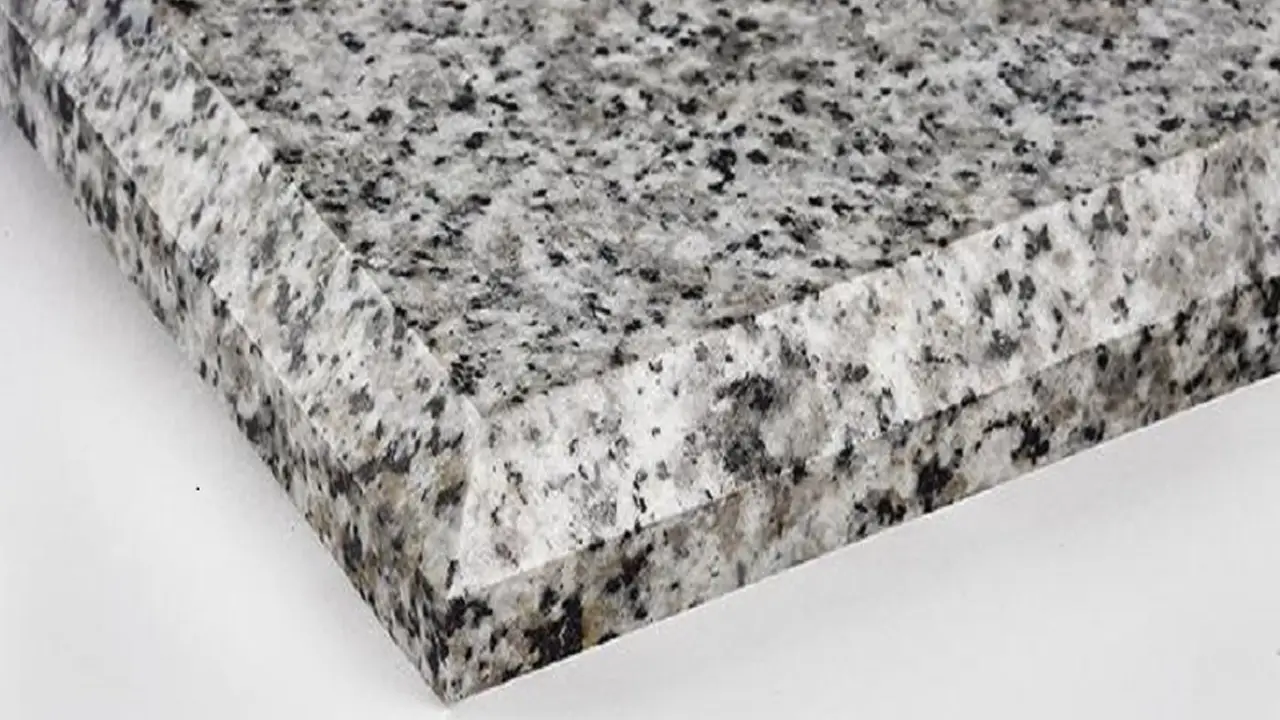


Table of Contents
Granite Stone
Granite stone is one of the most widely used natural stones in the global construction and building-materials market. Formed deep within the earth, granite is known for its high density, strong structure, and long service life, making it a reliable choice for both interior and exterior applications.
In international trade, granite is supplied in large volumes as blocks, slabs, and tiles, serving residential, commercial, and infrastructure projects. For B2B buyers, granite is valued not only for its physical performance but also for its stable demand, broad application range, and suitability for wholesale and export-based supply chains.
In the following sections, we will explore the technical characteristics, applications, surface finishes, and export considerations of granite stone to help importers and project-based buyers make informed decisions. Continue reading to gain a deeper understanding of how granite can be important for your next project or bulk purchase.
Types of Granite
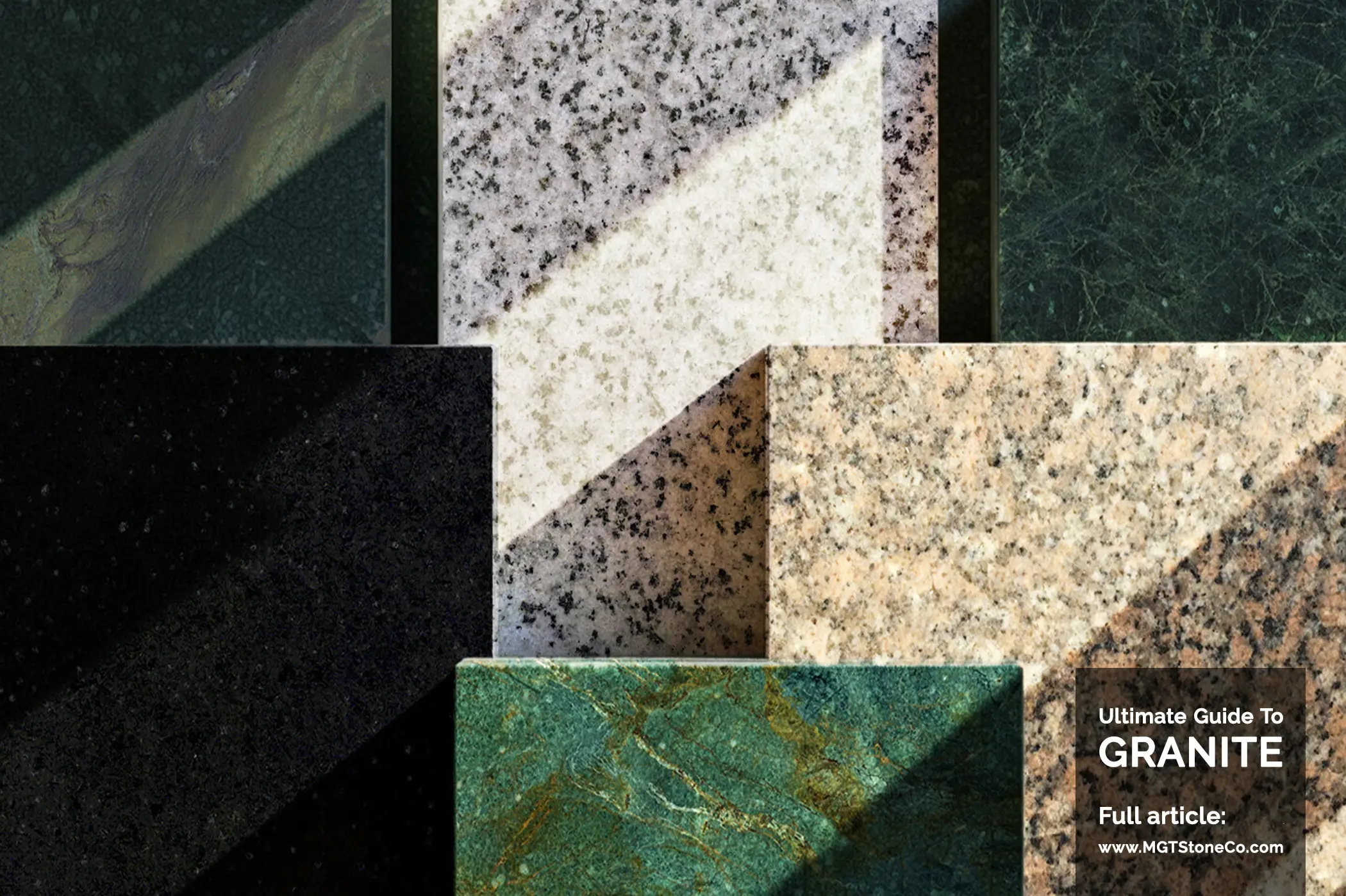
First of all, we should consider that there are several types of granite in world. It is available in a wide spectrum of colors, mineral compositions, and structural patterns, allowing buyers to select materials based on project requirements and market demand.
From deep black and charcoal tones preferred for modern façades and countertops, to white and grey varieties suitable for large commercial flooring projects, each type of granite serves a distinct architectural purpose. Types such as red granite and darker tones like green granite are widely used in statement features, monuments, and high-traffic public spaces due to their visual strength and durability. For instance, you can see typical patterns and structures in our green granite collection. Beyond color, granites differ in grain size, background consistency, and veining movement — all of which directly influence their suitability for book-matching, large-scale cladding, or cut-to-size production.
For importers and wholesale buyers seeking reliable Iranian granite supply, you can review available Iranian granite slabs and formats in our granite products collection:
https://mgtstoneco.com/product-category/granite/
In the next section, we will examine the technical properties of granite and how they impact performance in demanding construction environments.
Granite Properties
Granite is classified as an intrusive igneous rock composed mainly of quartz, feldspar, and mica. Its crystalline structure gives it high compressive strength, low water absorption, and strong resistance to abrasion. Granite properties make it particularly suitable for high-traffic commercial flooring, exterior cladding, industrial environments, staircases, and kitchen countertops.
Compared to travertine, granite has a much less porous structure, which makes it more resistant to weather changes, freeze–thaw cycles, and surface wear. This is because granite has a very dense molecular structure that improves its long-term performance. Therefore, granite stone is an excellent option for both interior and exterior applications where structural reliability is a priority. For B2B buyers and contractors, this means lower long-term maintenance costs and strong lifecycle performance in demanding construction projects.
Granite vs Quartz
While granite is a 100% natural stone extracted directly from quarries, quartz surfaces are engineered products made from crushed quartz mixed with resins and pigments. Quartz offers uniform patterns and controlled coloration, which can be beneficial for projects requiring strict visual consistency. However, granite provides natural variation, higher heat resistance, and stronger UV stability, making it more suitable for outdoor installations.
For wholesale buyers, the distinction is also commercial: granite is traded globally as blocks and slabs directly from quarry sources, offering flexibility in cutting, finishing, and custom fabrication. Quartz, on the other hand, is factory-manufactured and typically limited to slab supply with standardized dimensions.
Granite vs Marble
Granite and marble differ significantly in composition and performance. Marble is a metamorphic stone primarily composed of calcite, which makes it softer and more sensitive to acids (For more information, read The Ultimate Guide to Marble Stone). Granite’s harder mineral composition gives it greater scratch resistance and structural strength, making it preferable for heavy-use environments such as airports, shopping centers, and public buildings.
Marble is often selected for decorative interior applications due to its smooth texture and flowing veining, whereas granite is chosen when durability and mechanical resistance are the primary concerns. It does not mean granite cannot be decorative — patterned varieties like Turquoise Granite clearly show its visual appeal — and it also does not mean marble cannot be used in high-traffic areas. Ultimately, the choice depends on priorities and long-term planning. For project managers and importers, understanding this difference is important when selecting materials for large-scale developments.
Given these physical characteristics and performance advantages, the next important consideration for international buyers is how granite is supplied and traded in global markets — particularly in which export formats it is available for wholesale orders.
Granite Export Formats and Supply Options
In international stone trade, the commercial success of granite stone depends not only on its quality but also on the format in which it is supplied. Different buyers require different processing levels based on their market structure, fabrication capacity, and project type. From raw quarry blocks to finished countertops, granite can be exported in multiple formats to meet the needs of importers, distributors, fabricators, and large-scale contractors. Understanding these supply options allows B2B buyers to optimize cost, reduce waste, and align purchases with their production capabilities. This will be discussed in greater detail in the following paragraphs.
Granite Block
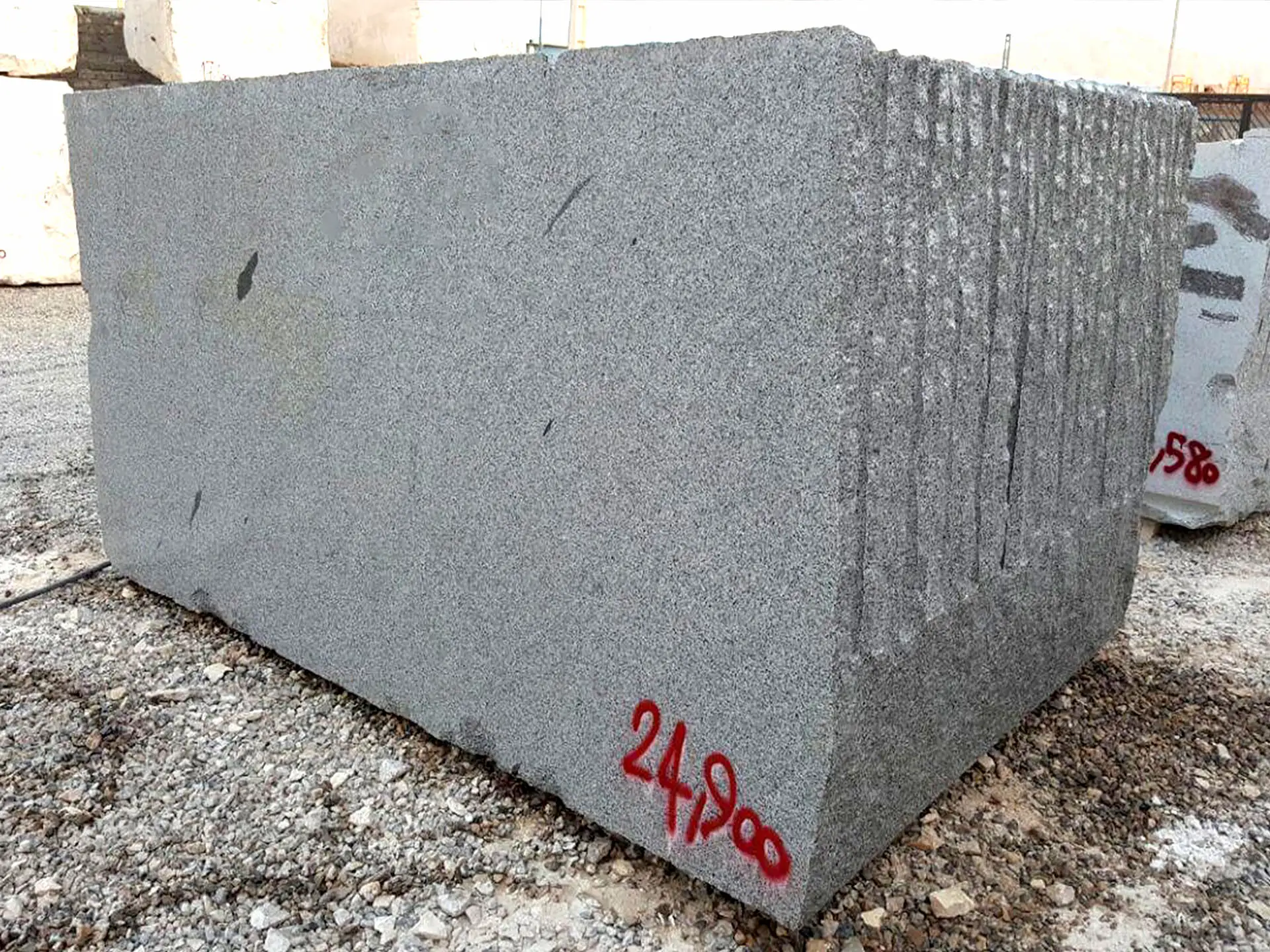
Granite blocks represent the earliest stage of processing after extraction from the quarry. These large raw blocks are typically purchased by overseas factories equipped with gang saw or multi-wire cutting machines. Importing blocks allows buyers to control slab thickness, finishing type, and final product dimensions within their own facilities.
Block export is usually calculated in ton and requires careful container loading, weight management, and reinforced packing. For markets with strong local fabrication infrastructure, importing granite blocks offers maximum flexibility and margin control.
One of the most commonly exported granite block types from countries such as Iran and India is black granite.
Granite Slab
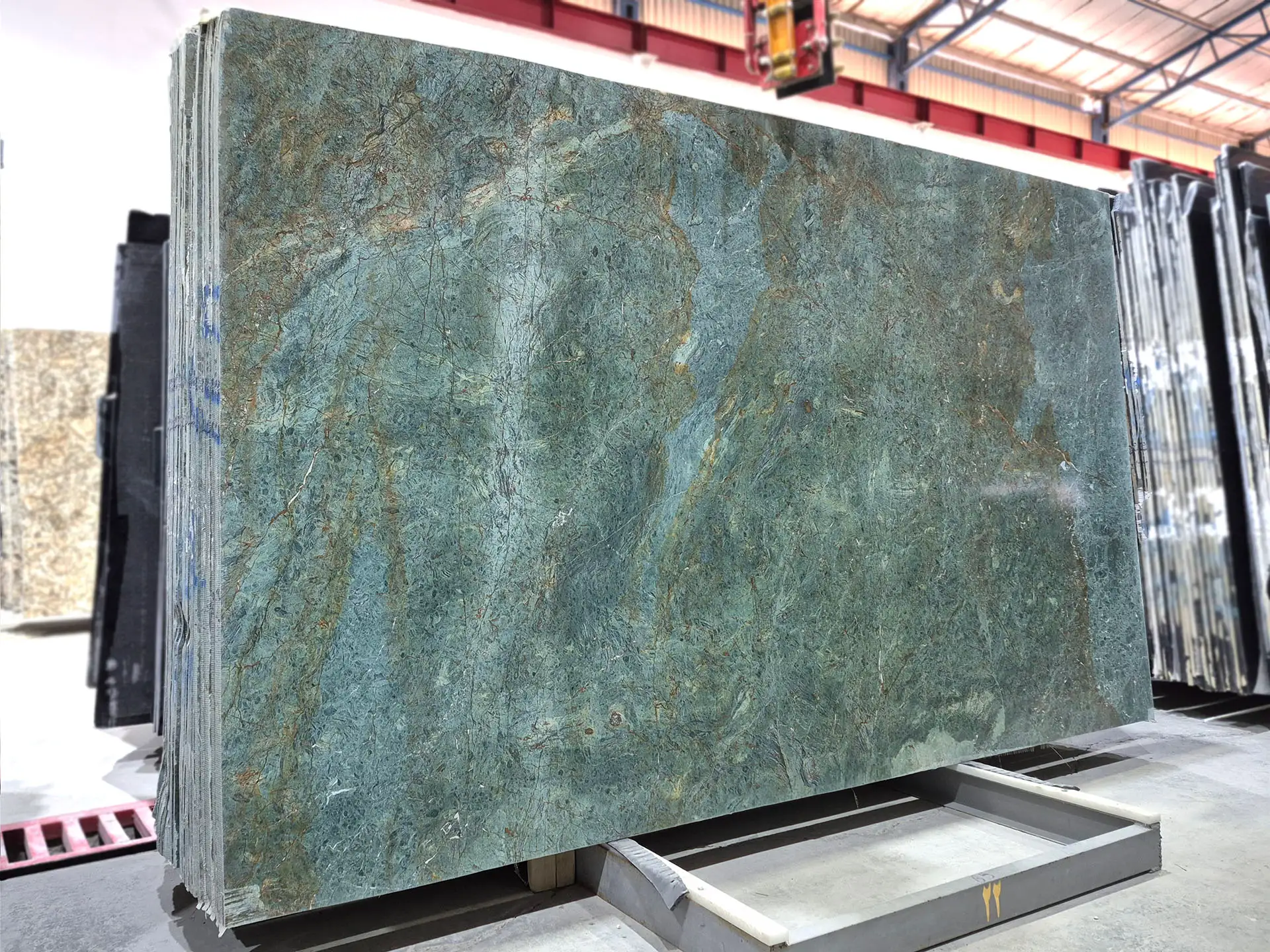
Granite slabs are the most widely traded export format in the global natural stone industry. After cutting and calibration, slabs are supplied in standard thicknesses such as 2 cm and 3 cm, with various surface finishes including polished, honed, flamed, or leathered. Slabs allow distributors and fabricators to produce countertops, flooring panels, wall cladding, and custom cut-to-size pieces according to market demand.
This format offers a balance between processing efficiency and design flexibility, making it the preferred option for many wholesale buyers. You can check available ready-stock slabs and ongoing production batches in our granite slab collection:
https://mgtstoneco.com/product-category/granite/
Wholesale Granite Slabs
In wholesale granite slab transactions, volume consistency, color uniformity, and production capacity are key factors. Bulk orders are typically container-based, with slabs bundled securely in wooden crates to minimize transit risk.
For importers serving construction projects or retail stone yards, wholesale slab purchasing ensures competitive pricing, faster turnaround, and stable inventory planning. Selecting a supplier capable of maintaining consistent quality across multiple containers is critical for long-term partnerships.
For container-based orders, buyers typically reserve slabs from a single batch to maintain color consistency across projects, especially for patterned granites such as Picasso Green Granite.
Granite Tile
Granite tiles are pre-cut, calibrated pieces produced in standardized dimensions such as 60×30 cm, 60×60 cm, or larger formats depending on project specifications. Tiles are commonly used in commercial flooring, public infrastructure, shopping centers, and residential developments.
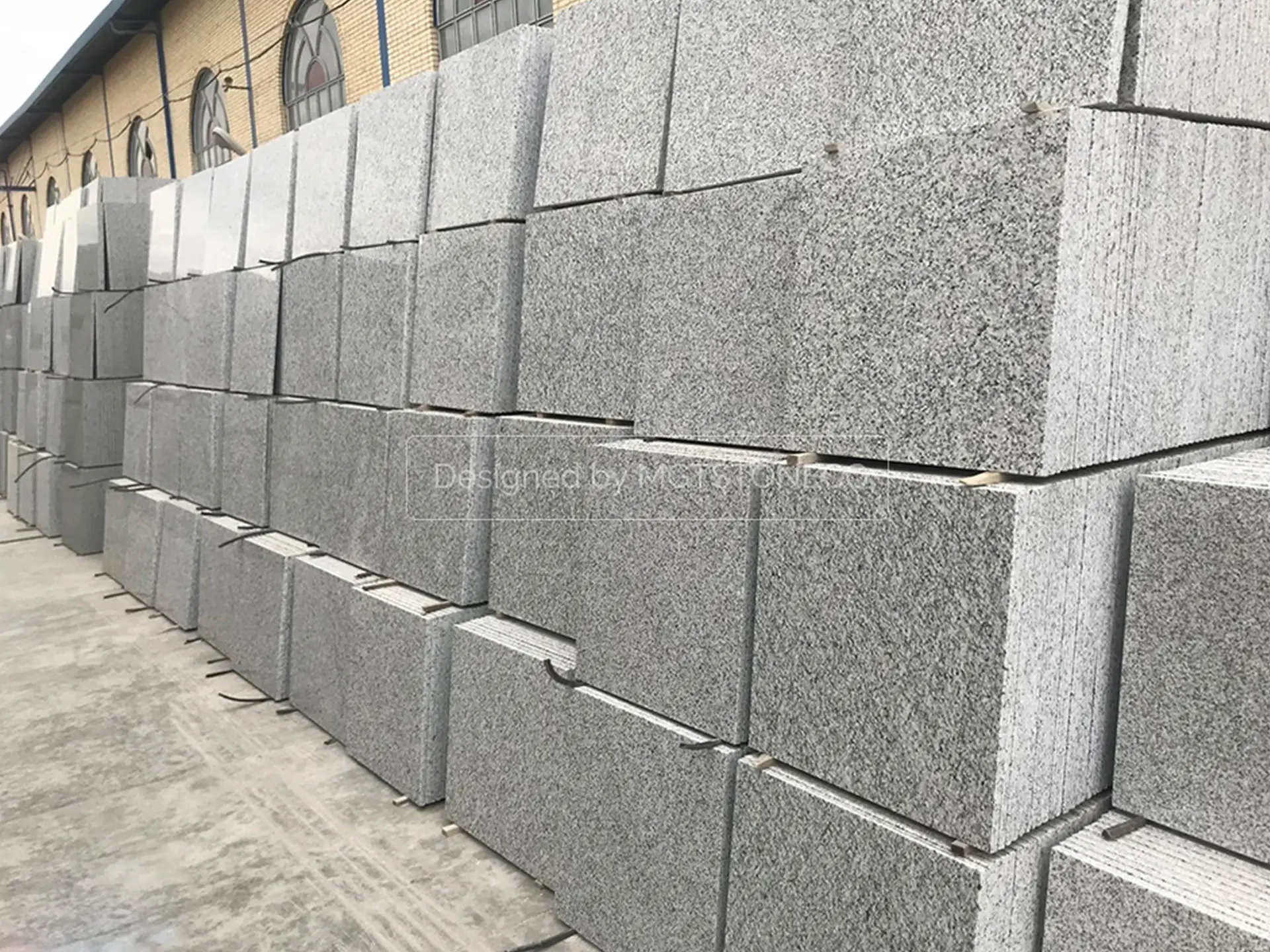
Exporting granite in tile format reduces on-site labor and speeds up installation, especially for large-scale developments. For project-based buyers, factory-cut tiles ensure dimensional accuracy and uniform thickness across the entire shipment. Grey granite tiles are among the most commonly exported granite tiles, especially for high-traffic areas.
Granite Countertop
Granite countertops are a higher-value processed format designed mainly for residential and commercial interior markets. These are cut, edged, and sometimes pre-polished according to standard kitchen or vanity dimensions. Exporting granite countertops requires precise fabrication, edge profiling, sink cutouts, and protective packaging to prevent damage during transit.
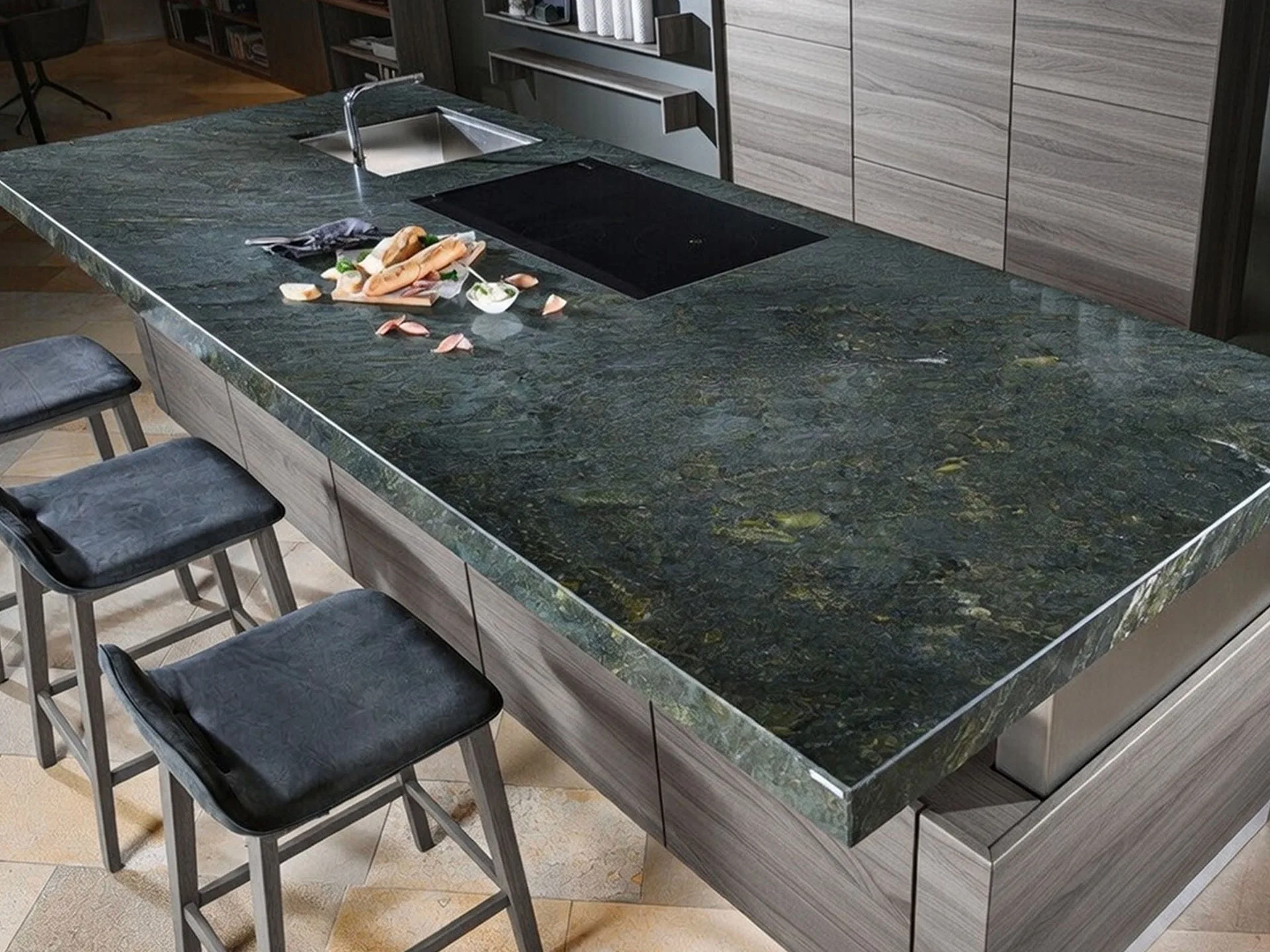
Cost of Granite Countertops
The cost of granite countertops in export markets depends on several variables, including slab quality, thickness, edge detailing, cutout complexity, finish type, and order volume. Transportation, container optimization, and packaging standards also influence the final landed price. For wholesale buyers, ordering in bulk directly from the source helps control procurement costs and improve profit margins in competitive markets.
Granite Kitchen Countertops
Granite kitchen countertops remain one of the strongest segments in global stone trade. Their resistance to heat, scratching, and heavy daily use makes them ideal for residential and hospitality projects. Export-ready kitchen countertops are typically customized based on architectural drawings, ensuring compatibility with cabinetry systems in the destination market.
Granite Bathroom Vanity
Granite bathroom vanity tops are generally smaller in dimension but require high surface precision and finishing quality. These products are often supplied with pre-drilled faucet holes and polished edges, ready for installation. In wholesale export, bathroom vanity tops provide an opportunity to diversify product offerings while maximizing slab yield efficiency during production. If you are generally interested in stone varieties, please refer to the following link: https://mgtstoneco.com/product/stone-vanity-top/
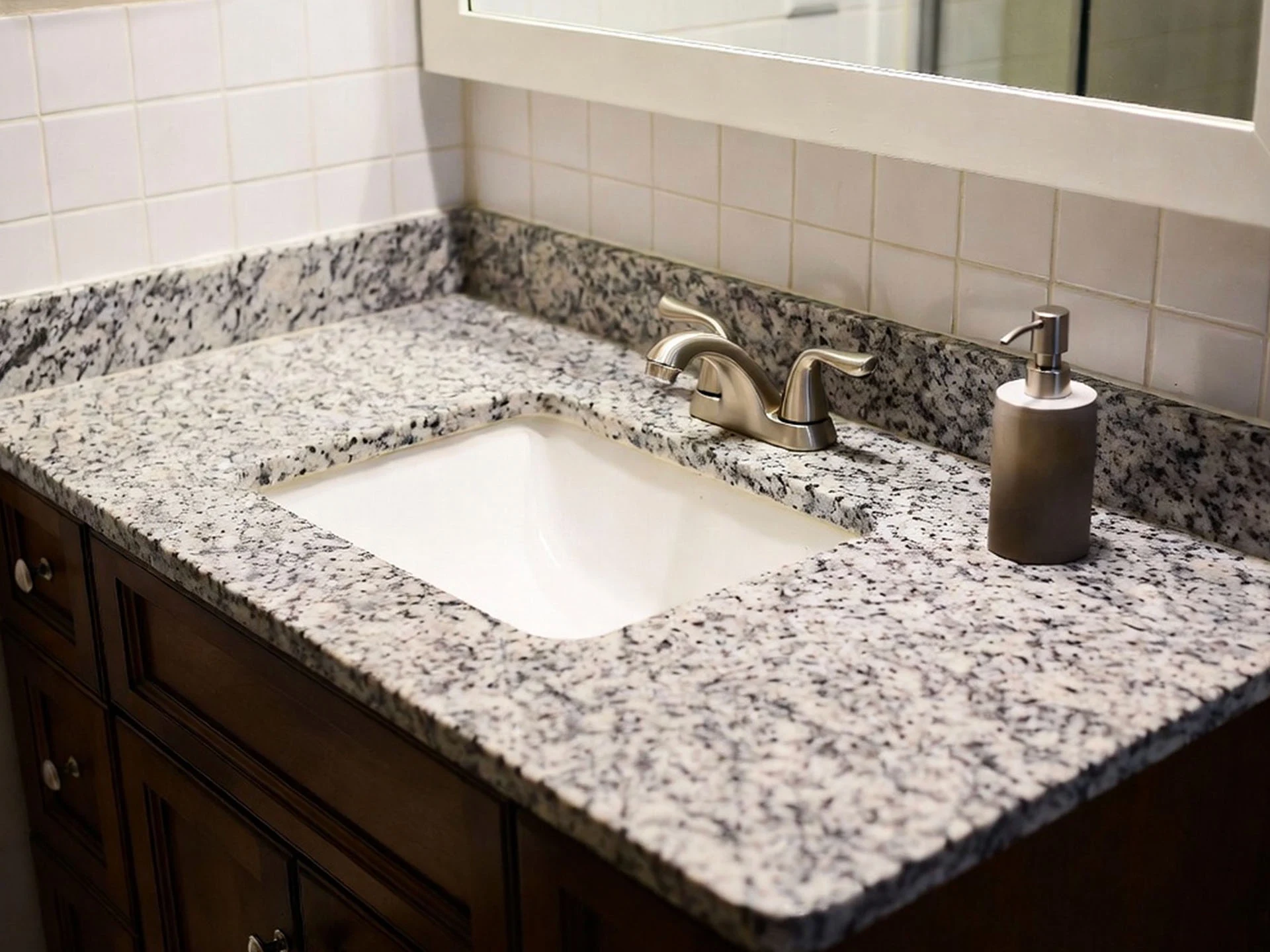
By understanding these export formats and supply options, international buyers can better determine which level of processing aligns with their operational model — whether sourcing raw blocks for factory cutting or importing fully fabricated granite products ready for installation.
Granite Flooring
Granite flooring is widely specified in commercial and high-traffic environments where durability and long-term performance are essential. Thanks to its dense structure and resistance to abrasion, granite performs exceptionally well in airports, shopping centers, office towers, hotels, and public buildings. Beyond strength, granite flooring offers visual stability over time — maintaining its surface integrity even under constant foot traffic and heavy load conditions. Depending on the project concept, buyers can select from polished finishes for refined interiors, flamed or honed surfaces for slip resistance, and calibrated tiles or large-format slabs for seamless layouts. Pearl Grey Granite and Ash Blue Granite are among the most frequently selected products for this purpose.
For B2B buyers and project contractors, choosing the right granite flooring involves more than color selection. Thickness, surface finish, installation method, joint planning, and subfloor preparation all directly affect long-term performance. When sourcing granite flooring from MGT Stone Co., we provide detailed technical data, finish options, recommended applications, and export packaging specifications to ensure the material aligns with your project requirements and local standards.
Granite is often specified in projects where long lifecycle performance is more important than short-term aesthetic trends.
Granite Installation
Proper granite installation plays a critical role in maximizing the stone’s lifespan and structural performance. Due to its weight and density, granite stone requires a stable substrate, appropriate adhesive systems, and correct leveling procedures. For large-format slabs, mechanical anchoring systems may be necessary in façade or vertical applications. In flooring installations, expansion joints, grout selection, and surface alignment must be carefully planned to prevent long-term stress or cracking.
For international buyers, installation considerations often begin before shipment — including selecting the appropriate thickness, finish type, edge treatment, and cut-to-size preparation. When partnering with MGT Stone Co., buyers receive comprehensive product guidance, dimensional specifications, loading details, and technical support documentation to assist fabricators and contractors during installation. This ensures that the granite performs as expected from quarry to final placement, minimizing project risk and maximizing long-term value.
Our team can also provide installation guidelines and technical data sheets upon request: Contact Us.
Granite Surface Finishes
The surface finish of granite significantly influences its visual character, functional performance, and suitability for different environments. Beyond color and pattern, the finishing process determines how the stone reflects light, responds to touch, and performs under specific conditions such as heavy traffic or outdoor exposure. Selecting the right finish is therefore a strategic decision for architects, importers, and contractors aiming to match design intent with technical requirements.
The most in-demand types of granite surface finishes in the market are discussed below.
Polished Granite
Polished granite is the most recognized and commercially popular finish in global stone trade. For example, Crystal White Granite is sold in its polished format in 90% of cases. Through mechanical polishing, the surface becomes smooth and highly reflective, enhancing the natural minerals and color depth of the stone. This finish is commonly specified for interior flooring, wall cladding, countertops, and reception areas where a bright, refined appearance is desired.
In wholesale markets, polished granite slabs are frequently selected for their strong visual appeal and broad application range, particularly in residential and hospitality projects.
Honed Granite
Honed granite features a smooth but matte surface, offering a softer and more subtle aesthetic compared to polished finishes. While it does not reflect light as strongly, it provides a contemporary look that is often preferred in minimalist designs and commercial interiors.
Functionally, honed granite can offer better slip resistance than polished surfaces, making it suitable for flooring in areas where glare reduction or improved traction is required. This finish is increasingly requested in modern architectural specifications.
A typical case is Tiger Black Granite, a well-known black granite, which is of interest to B2B buyers in both honed and polished formats.
Leathered Granite
Leathered granite is produced by applying specialized brushing techniques to create a textured yet refined surface. The result is a slightly rough, low-sheen finish that enhances the stone’s natural movement while adding tactile depth. These features are clearly visible in a stone such as Amazon Green Granite when it is provided in a leathered finish, whose appearance closely resembles fine leather!
This finish is particularly popular for kitchen countertops, feature walls, and design-driven interior projects where a distinctive surface texture adds character. Leathered granite also tends to mask fingerprints and watermarks more effectively than high-gloss finishes, which can be an advantage in residential applications.
Flamed Granite
Flamed granite is achieved by exposing the stone surface to high-temperature flames, causing the crystals to burst and create a rough, slip-resistant texture. This finish is primarily used for exterior paving, landscaping, urban projects, and façade cladding. This uneven surface can be observed on Super Grey Granite when it has a flamed finish.
Because of its enhanced traction and weather resistance, flamed granite is a preferred choice for outdoor flooring in public spaces, sidewalks, and high-traffic exterior areas.
By understanding the functional and visual differences between these finishes, international buyers can better align their granite selection with project specifications and market preferences — ensuring both performance and design consistency in large-scale developments.
Buy Granite Slabs Online: What B2B Buyers Should Know
Digital sourcing has become an essential part of the international stone trade, allowing importers to evaluate materials, compare suppliers, and plan purchases without the need for constant travel. However, buying granite slabs online in a B2B environment involves more than viewing photos and requesting a price list. Professional buyers typically review slab batch videos, crate packing details, dimensional tolerances, shade variation ranges, and production capacity before confirming an order. Reliable suppliers provide high-resolution images, live warehouse selections, and clear documentation so buyers can confidently match the material with project specifications.
For wholesale transactions, logistics transparency is equally important. Buyers should confirm container loading methods, protection systems between slabs, labeling accuracy, and replacement policies before shipment. When sourcing from MGT Stone Co., customers receive detailed selection media, technical data sheets, packing previews, and shipment information to support remote purchasing decisions. This approach allows international partners to secure bulk orders efficiently while maintaining quality control from a distance.
Buyers can also request real-time warehouse selection videos before shipment confirmation: Contact Us.
In the next section, we will review the key factors that influence granite pricing and how buyers can evaluate cost structures in global supply markets.
Granite Pricing Factors in International Trade
In global stone commerce, granite pricing is determined by a combination of geological characteristics, processing level, and logistical considerations rather than a single fixed rate. Factors such as granite quarry location, color rarity, block recovery rate, slab yield, surface finish, thickness, and order volume all influence the final quotation. In addition, export-related costs — including packaging, container optimization, port handling, and freight conditions — play a major role in the landed cost for international buyers.
For wholesalers and project contractors, understanding how these variables interact helps with accurate budgeting and supplier comparison. A reliable exporter typically provides transparent quotations that separate material value from logistics, enabling buyers to evaluate margins and plan inventory more effectively.
Granite Slab Price
The price of granite slabs mainly depends on material consistency and processing quality. Slabs with uniform background color, minimal micro-fractures, and stable thickness calibration generally fall into higher commercial grades. Production technology also affects pricing — multi-wire cutting, resin treatment, and precision polishing improve slab performance but increase processing cost.
Batch size is another key factor: container-based purchases reduce unit price compared to small mixed orders because they optimize production and packing efficiency. Therefore, wholesale buyers often achieve better cost control by ordering larger volumes from a single quarry source.
Granite Price Per Square Foot
Granite price per square foot is typically used by fabricators, retailers, and contractors to estimate installation budgets in their local markets. This calculation converts slab cost into usable surface area after considering cutting loss, fabrication waste, and finishing operations.
However, in international trade, suppliers generally quote per square meter or per slab, while the per-square-foot value becomes relevant after fabrication in the destination country. Buyers should therefore evaluate the effective usable yield of each slab — not only the initial purchase price — to determine real project cost and profitability.
Granite Suppliers
Choosing the right granite supplier is a critical decision for importers and project-based buyers because consistency matters more than a single successful shipment. A dependable supplier must maintain stable color ranges across batches, calibrated thickness accuracy, and predictable production timelines. Professional buyers typically evaluate granite quarry access, factory capability, inspection procedures, and communication clarity before establishing long-term cooperation. Suppliers who can provide repeatable quality and organized documentation reduce operational risk and simplify procurement planning.
Granite Exporters
Not every stone producer is prepared for international trade. Granite exporters must understand container optimization, reinforced wooden packing, moisture protection, and safe slab securing systems to prevent breakage during transit. In addition, export experience involves coordinating inspection reports, packing lists, certificates of origin, and shipment tracking. Buyers working with experienced exporters such as MGT Stone Co. benefit from fewer delivery uncertainties and smoother customs clearance in destination countries. For more information about MGT Stone Co. and its history in exporting Iranian natural stone, please visit the following pages:
MGT Introduction: https://mgtstoneco.com/about-us/
MGT History: https://mgtstoneco.com/company/
Granite Suppliers in Iran
Iran is among the key natural stone producing countries supplying construction markets in the Middle East, Europe, and Asia.
Iran is recognized as one of the resource-rich regions in the natural stone industry, offering a wide range of granite colors (including rare colors such as Sun Orange Granite) and patterns formed across different geological zones. This diversity allows international buyers to source materials suited to both architectural projects and retail markets while keeping procurement costs competitive. Access to multiple quarries also enables a consistent supply for long-term orders, which is especially important for distributors serving repeat construction projects.
Iranian Granite Supplier
Working with an Iranian granite supplier requires structured coordination rather than simple purchasing. Buyers typically review block selection, production scheduling, and batch reservation before shipment to ensure future availability matches ongoing demand. Reliable suppliers like MGT Stone Co. support this process by providing clear production updates, visual selection materials, and organized order tracking. This collaborative approach helps distributors and contractors maintain stable inventory planning in their local markets. To become familiar with the services that MGT Stone Co. provides for its customers, please visit the following link:
https://mgtstoneco.com/services/
Export Granite from Iran
Exporting granite from Iran involves coordinated logistics from factory loading to port handling and international freight arrangements. Standard procedures include protective packing, container weight balancing, shipment documentation, and pre-shipment verification to ensure the order matches agreed specifications. When these steps are managed carefully, buyers can receive material ready for immediate fabrication or distribution without unnecessary delays or additional handling costs.
MGT Stone Granite
MGT Stone Co. offers a diverse granite collection covering a wide spectrum of colors, patterns, and technical specifications suited to different market demands. Through access to multiple quarries and controlled production processes, the company maintains consistent quality across blocks, slabs, and tiles, ensuring materials meet project requirements in durability, dimensional accuracy, and surface finish. The supply process follows a structured workflow that combines quarry sourcing, controlled factory production, and organized export preparation. Buyers are supported with selection media, technical specifications, and shipment details so purchasing decisions can be made remotely with confidence. By focusing on repeatable quality and clear communication, MGT Stone Co. aims to build long-term partnerships with wholesalers, distributors, and project contractors seeking a stable granite supply for international markets.
Request Granite Quotation
For importers, distributors, and project contractors planning bulk purchases, quotations are prepared based on order volume, finish type, thickness, and destination port. Providing project details allows accurate pricing and container optimization.
You can send your inquiry including required dimensions, quantity, and destination port, and our team will prepare a tailored quotation and packing plan: Contact US!
Conclusion
You Now Understand Granite Stone and the Right Way to Source It!
Granite remains one of the most dependable materials in the international construction market due to its durability, wide application range, and consistent long-term demand. From understanding its physical characteristics and surface finishes to selecting the right export format and evaluating pricing structures, successful procurement depends on informed decision-making at every stage. For wholesalers, distributors, and project contractors, working with a supplier who provides clear technical information and organized shipment processes significantly reduces risk and improves operational efficiency.
As global sourcing increasingly moves toward remote selection and container-based purchasing, reliable communication and predictable quality become just as important as the material itself. By partnering with an experienced supplier such as MGT Stone Co., buyers can access structured support — from material selection and documentation to packing and shipment coordination — ensuring granite arrives ready for fabrication or installation. For detailed specifications, availability, or quotations for your upcoming orders, contacting our team is the best first step toward a smooth and dependable supply experience.
Granite Stone FAQ
Blocks suit factories with cutting machines, slabs suit distributors and fabricators, and tiles or cut-to-size pieces suit construction projects that need fast installation.
Price depends on color consistency, thickness, finish, processing level, order volume, and shipping costs. Suppliers usually quote per slab or per square meter.
Yes. Granite is highly resistant to wear and weather. Flamed or honed finishes are commonly used for exterior flooring and public spaces.
Review slab photos or videos, thickness accuracy, packing method, and shipment details to ensure the material matches your order.
Typically a commercial invoice, packing list, certificate of origin, and bill of lading are required for customs clearance.